The Gravy Is Blended, the Ritual Is Intact: A Raw Sunday Roast That Earns Its Place
Sunday, half past twelve, and someone two doors down has had their oven going since ten. Let them. This is the piece where I argue — cheerfully, and with a blender — that the Sunday roast was never really about heat. It is about a shape: something crisp, something cool and creamy, something sharp enough to cut through the richness, and gravy. Nail those four and the ritual survives contact with a cold kitchen.
I am not going to insult you by pretending a plate of raw cauliflower is a Yorkshire pudding. It isn't, and anyone who says otherwise has not met a proper one. What I am saying is that the roast's real genius is its architecture — a plate of strong, separate things assembled into one generous hour — and architecture does not need a fan oven.
The roast is a shape, not a temperature
Think about what you actually miss in January: not the chicken, but the contrast. Hot fat against cold slaw. Gravy soaking into something starchy. A condiment with enough vinegar in it to make you sit up. Build those contrasts cold and the plate still reads as a roast, in the same way a good cheese board reads as dinner even though nothing has been near a hob.
So the rule for this table is simple. Four components, each doing one job loudly, plus bread or crackers if you want them. No attempt at imitation meat, no sad stand-in for roast potatoes. If you want potatoes, boil them the day before, crush them with salt and olive oil, and serve them at room temperature with the gravy spooned over. That is not a compromise; that is a potato salad with ambition.
First, the 'crackling'
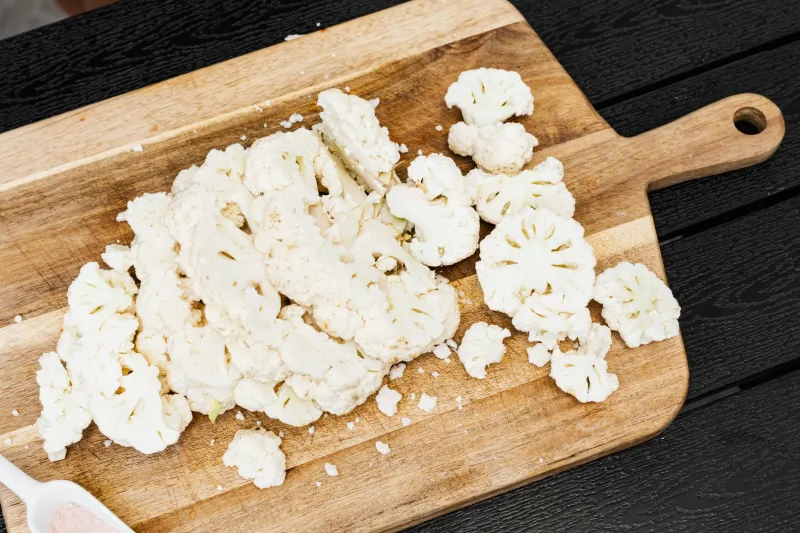
Cauliflower, broken into small florets and sliced thin through the stem so it actually shards between your teeth. Toss it with a tablespoon of olive oil, a heaped tablespoon of nutritional yeast, a teaspoon of smoked paprika, plenty of fine salt and a good grind of pepper, then spread it out and leave it for twenty minutes. The salt draws out a little water and the yeast powder clings. What you get is savoury, saline, faintly smoky and genuinely crunchy — not crackling, but doing the same job on the plate.
Add a handful of cold roasted-in-name-only nuts (walnuts or cobnuts, roughly crushed) across the top just before serving. They bring the fattiness the cauliflower lacks.
Celeriac remoulade, with the sharpness turned up
Half a celeriac, peeled and cut into matchsticks — or coarsely grated if, like most of us, your knife skills have limits. Immediately toss with the juice of half a lemon, because celeriac browns faster than an apple. Then dress it with three tablespoons of mayonnaise or, if you want it plant-forward and lighter, half mayo and half coconut yoghurt, a teaspoon of Dijon, a teaspoon of capers, a tablespoon of chopped parsley and a splash of the vinegar from the caper jar.
Let it sit for half an hour. Celeriac needs that time to stop being a raw root and start being a salad.
Beetroot horseradish that actually bites
Grate two cooked beetroot — the vac-packed ones from the shop are fine and save you an hour of purple hands — and fold through a tablespoon of creamed horseradish, a teaspoon of red wine vinegar, salt and a little grated lemon zest. Taste it. If it does not make your eyes water slightly, add more horseradish; the heat fades as it sits, so make it bolder than feels sensible at nine in the morning.
Gravy, blended not simmered
This is the component people raise an eyebrow at, and it is the one that convinces them. Into a blender: a handful of mushrooms (chestnut, or a mix), a small handful of walnuts, a tablespoon of tamari, a teaspoon of miso, a teaspoon of Dijon, a squeeze of lemon, a pinch of dried thyme, a clove of garlic and about 150ml of water. Blend hard until completely smooth, then adjust — more water for pouring consistency, more miso for depth, lemon for lift.
It will separate if it stands. Shake the jug or give it a quick blitz before it goes on the table and nobody will know. Warm it gently if you like; nobody here is handing out badges for temperature purity, and a slightly warm gravy over cold vegetables is a genuinely lovely thing in November.
The make-ahead morning
- Saturday night: soak nothing, but toast and crush your nuts and put them in a jar. Buy the beetroot and celeriac so you are not doing a shop run at eleven.
- 9am: blend the gravy, decant into a bottle, refrigerate.
- 10am: make the remoulade, cover, refrigerate.
- 11am: grate the beetroot and mix the horseradish. Keep it cold and covered — it stains.
- 11.30am: dress the cauliflower and leave it on the counter. This is the only component that wants to be made late, because the salt softens it over time.
- 12pm: everything out on one big board, gravy in a jug, and a bowl of something pickled in the middle because a Sunday table without a pickle is just a buffet.
Small fridge? The gravy bottle and the remoulade go at the back, the beetroot in a lidded jar on the door, and the cauliflower stays out. Nothing here needs more than a shelf and a half.
Where I stop short
I will not tell you this replaces a roast chicken, and I will not pretend it is cheaper than a bag of potatoes. It is a different Sunday, for the weeks when you cannot face the washing up or the timing or the meat. What it does deliver is the thing the roast is for: everyone sitting down at the same time, reaching across each other, arguing about the gravy.
Which, by the way, is the whole point. The oven is not a personality. The table is.