Chestnut Smoke and a Cold Lunch: Plotting a Raw Route Through the 2026 Christmas Market
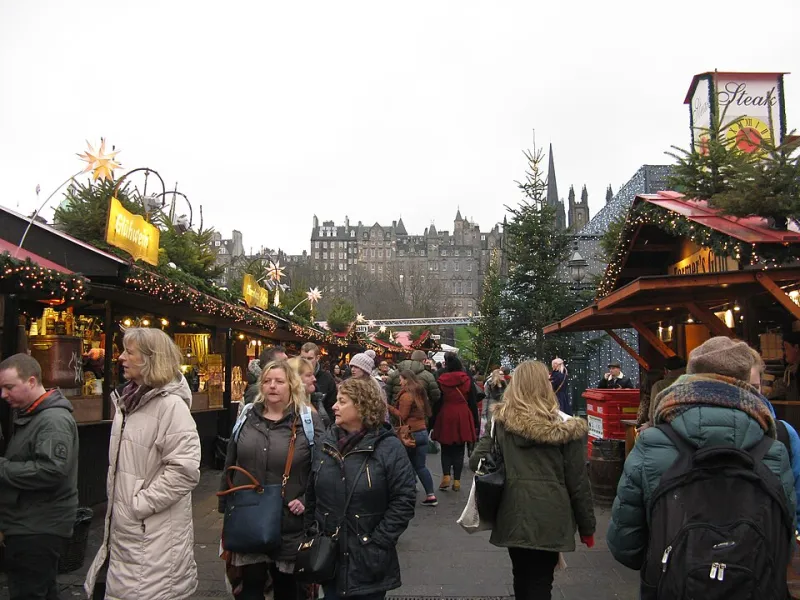
Photo: M J Richardson , CC BY-SA 2.0, via Wikimedia Commons
The first proper cold snap arrives, the lights go up on the wooden chalets, and every city centre in Britain starts to smell of the same three things: sugar, smoke and hot oil. It is a lovely smell. It is also, if you eat raw or plant-forward, a slightly complicated one. The stalls are not arranged with us in mind, and the default fallback — a baked potato in a polystyrene tray, eaten standing up — is nobody's idea of a good lunch.
But markets are not restaurants. They are shops, briefly, outdoors. Once you stop looking for a menu and start looking for produce, the whole thing loosens up.
Walk the loop before you buy anything
Markets are laid out like a wedding buffet: the loud, queue-heavy hot food sits in the middle where foot traffic is worst, and the quieter, more useful stalls get pushed to the edges. Do one full circuit first. No buying, no queueing, just reconnaissance.
The stalls worth remembering are rarely the ones shouting. Look for the greengrocer selling apples and satsumas out of crates, the nut roaster, the olive and antipasti counter, the dried fig and apricot trays, the spice stall, and — if you eat dairy — the cheese van with a chalkboard. These are the places where a cold lunch actually comes together.
The five-part rule for a market lunch
Build a meal from five bits and it will taste deliberate rather than improvised:
- Crunch. A sharp apple, a bag of mixed nuts, a handful of cabbage slaw from a deli stall, carrot sticks.
- Salt. Olives, pickled onions, a scatter of salted almonds, a piece of strong cheese if that's your thing.
- Fat. Nuts, seeds, olive oil from a stall that sells it by the bottle, avocado if you're lucky enough to find one.
- Acid. A squeeze of lemon, a pickled walnut, a few cornichons, a splash of vinegar from the oil-and-vinegar man.
- Sweet. Medjool dates, dried figs, a satsuma peeled with cold fingers, a square of good dark chocolate.
Two or three of those from two or three different stalls beats anything on a hotplate.
Asking a vendor a useful question
Nobody expects you to interrogate them, but 'is this raw?' tends to get a blank look, because for most foods sold in the UK, raw isn't a legally defined term. Ask about the actual process instead, and you'll get an actual answer:
- Is this cured, smoked, or cooked?
- Were the nuts dry-roasted, or roasted in oil?
- When was this fruit cut?
- Has anything on this board been heated?
- Could I have it in my own tub?
- Which tongs are for this one?
Six small questions, asked cheerfully while you're already buying something, will get you further than any amount of hovering. And if the answer is 'no idea, love, I just sell it', take that as information too.
Cross-contamination is a conversation, not a confrontation
Shared boards, shared tongs, a knife that has just been through a sausage — this is the realistic hazard at a market, far more than anything in the ingredients themselves. Be quick and friendly about it. Ask for the board to be wiped, ask for a clean pair of tongs, ask for your olives to go straight into your own container. Vendors do this all day; most will oblige without a second thought.
Practical habits that help:
- Carry a small tub and a spork. It solves half the problems before they start.
- Buy whole fruit you peel yourself — satsumas, bananas, oranges — rather than pre-cut fruit that's been sitting out in the cold.
- Skip anything from an open tray that's been picked over by a hundred hands.
- Keep hand gel in your pocket, and use it before you eat rather than after.
The warm drink problem
Mulled wine is simmered, so if you're strict about heat, it's out. So is the hot chocolate unless you ask. What's left is better than you'd think: spiced apple juice, hot ginger with lemon, a proper cup of tea, or — best of all — a flask of something you made at home and a bench with a view of the lights. Nobody has ever regretted the flask.
If the only option really is a baked potato
It happens. Small towns, short markets, one lonely food van. In that case, don't force it: buy a bag of walnuts, two apples and a pot of olives from a grocer's on the way, and eat them somewhere warmer. Markets sit in city centres, which means there's usually a supermarket within four minutes' walk and a covered bench within six. The market is the outing; the lunch doesn't have to be the same event.
A word on money
Christmas markets charge for the atmosphere, and the atmosphere is genuinely worth something. But a paper cone of roasted chestnuts, a bag of dates and a satsuma will cost you less than a single bratwurst, and it'll keep you going through the choir, the carols and the second lap of the lights. Bring coins, bring a tote bag, and set yourself a soft limit before you go in. It is remarkable how quickly a fiver of nuts becomes a fifteen-pound wander.
The small kit that makes it work
A tub with a lid. A spork. Hand gel. A flask. A tote bag. A fiver in coins. That's the whole list, and it fits in a coat pocket.
Then just enjoy it
Here's the thing worth saying plainly: you don't have to eat your way through a Christmas market to be part of it. The point is the cold air, the brass band murdering a carol, the stallholder who calls you 'my love', the ridiculous wooden reindeer. Take a friend, take a flask, take a tub of olives, and let the food be a small, good part of the afternoon rather than the whole obstacle course. Raw eating outdoors in December is entirely doable — it just needs a bit of route planning and slightly thicker socks.