Ugly Root, Bright Bowl: A Raw Celeriac Case for November
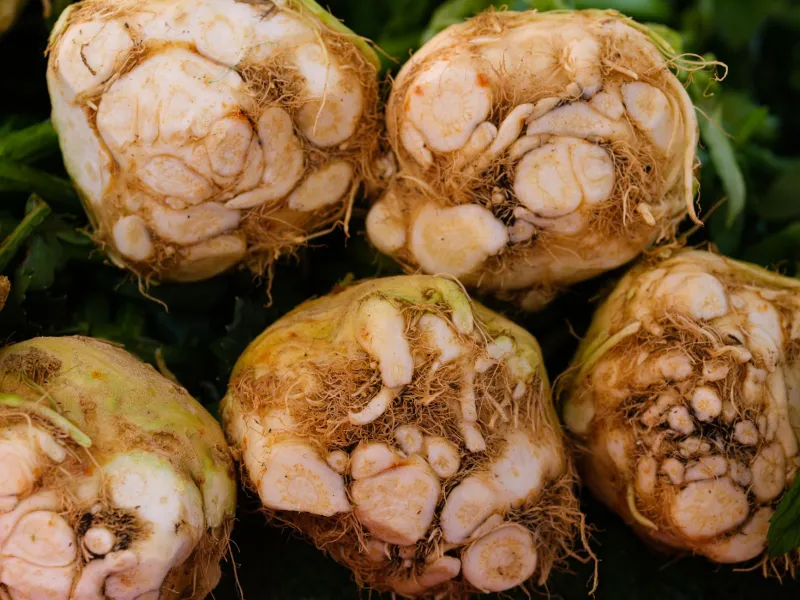
Celeriac has a face only a greengrocer could love. It looks like a turnip that has been in a fight, all knuckles and whiskers and patches of rough skin. But cut into it and you find pale, dense flesh with a gentle celery flavour and a snap that holds up beautifully without a single minute in the oven. For anyone eating raw and plant-forward in Britain this month, that is a very good thing.
November is peak celeriac season here. British-grown roots are in shops and markets now, often for less than a pound each, and they keep for weeks in a cool corner. They are not trendy. They are not Instagram-bright. They are, however, exactly the kind of ingredient a raw kitchen needs when the salad leaves start to look tired and the tomatoes have gone pale and expensive.
Why celeriac makes sense in a raw November kitchen
Raw celeriac is crunchy without being tough, creamy when grated finely, and savoury enough to carry strong flavours. It does not go watery the way cucumber can, and it does not wilt. A bowl of shaved celeriac will still have texture an hour later, which makes it a reliable lunch rather than a sad desk salad.
It is also cheap and steady. While imported leaves and out-of-season veg climb in price, a single British celeriac can make three or four generous portions. That matters in a month when the heating goes on and the food budget gets tighter. It is not a luxury ingredient pretending to be humble. It is genuinely humble, and that is the point.
Some raw eaters avoid celeriac because they have only met it roasted, or because the knobbly exterior looks like hard work. Fair enough. But once you get past the skin, it is one of the easier roots to work with. No cooking, no long soaking, no special equipment beyond a sharp knife or a box grater.
Buying and storing: a knobbly guide
Look for roots that feel heavy for their size. Light celeriac tends to be dry and spongy inside. The skin should be firm, not wrinkled or soft at the top, and the root end should smell clean and celery-like rather than musty. Smaller roots are often easier to peel, though larger ones give more flesh per pound. Both are fine.
If you buy from a market or greengrocer, ask for British-grown roots where you can. In November, there is no good reason to buy imported celeriac. The UK crop is in season and the difference in freshness is noticeable — the flesh is tighter, the flavour sweeter and less bitter.
At home, cut off the leafy top and any gnarly whiskers, then store the root whole in the fridge or in a cool, dark cupboard. A plastic-free approach works well: wrap it loosely in a damp cloth or keep it in a paper bag. It will last for weeks. Once peeled, celeriac browns quickly, so toss it with lemon juice or vinegar as you go. A whole peeled root will keep for a few days in a sealed container covered with water and a squeeze of lemon, but honestly, it is better to peel only what you need.
Three no-cook recipes to start with
These are not fussy recipes. They are ways of turning one root into three different bowls, each with its own texture and mood.
1. Classic-ish remoulade, made lighter
This is the French bistro classic, but we are skipping the heavy mayonnaise and going for a yoghurt-based dressing that still tastes rich. Grate half a medium celeriac coarsely — use the big holes on a box grater. Immediately toss with the juice of half a lemon. In a bowl, mix three tablespoons of thick plain yoghurt, a teaspoon of Dijon mustard, a teaspoon of cider vinegar, a pinch of salt and plenty of black pepper. Fold the celeriac through the dressing, then taste. It should be sharp, creamy and a little bit crunchy. Add more lemon if it feels flat. This is excellent on its own, piled into a lettuce cup, or alongside a baked potato for anyone who is not fully raw.
2. Coarse celeriac 'rice' with parsley and lemon
Cut a quarter of a peeled celeriac into chunks and pulse it in a food processor until it looks like coarse couscous. No processor? Grate it on the coarse side of a box grater — the texture will be a little chunkier and just as good. Tip it into a bowl and dress with olive oil, lemon juice, a big handful of chopped flat-leaf parsley, a small grated garlic clove and salt. Let it sit for ten minutes so the flavours settle. This makes a brilliant base for a raw bowl: add chopped apple, toasted seeds, or a spoonful of sauerkraut. It also fills out a lunchbox without needing bread.
3. Shaved celeriac and pear salad with mustard dressing
The key here is slicing the celeriac as thinly as you can. A mandoline is ideal, but a sharp knife and a little patience will do. Peel a small celeriac and shave it into a bowl. Core a ripe pear and slice it thinly too. Whisk together a tablespoon of olive oil, a teaspoon of wholegrain mustard, a teaspoon of maple syrup or honey, a splash of cider vinegar and salt. Toss the celeriac and pear through the dressing, then finish with chopped walnuts and a little chopped thyme if you have it. The pear brings sweetness, the celeriac brings crunch, and the mustard keeps it from being too sweet. Eat straight away while the pear is still firm.
The case for keeping it ordinary
Celeriac is never going to be the star of a food photograph. It is not a status vegetable. But that is exactly why it belongs in a raw British kitchen in November. It is affordable, local, long-lasting and genuinely versatile. It rewards a sharp knife and a bit of lemon juice, not a chef's technique.
So next time you see one of those ugly roots sitting quietly next to the swedes, pick it up. Peel it, shave it, grate it, taste it. It might not look like much, but it has a crunch that earns its place in the bowl.