The Fridge Is Your Kettle: Cold Teabag Marinades for Raw Winter Crunch
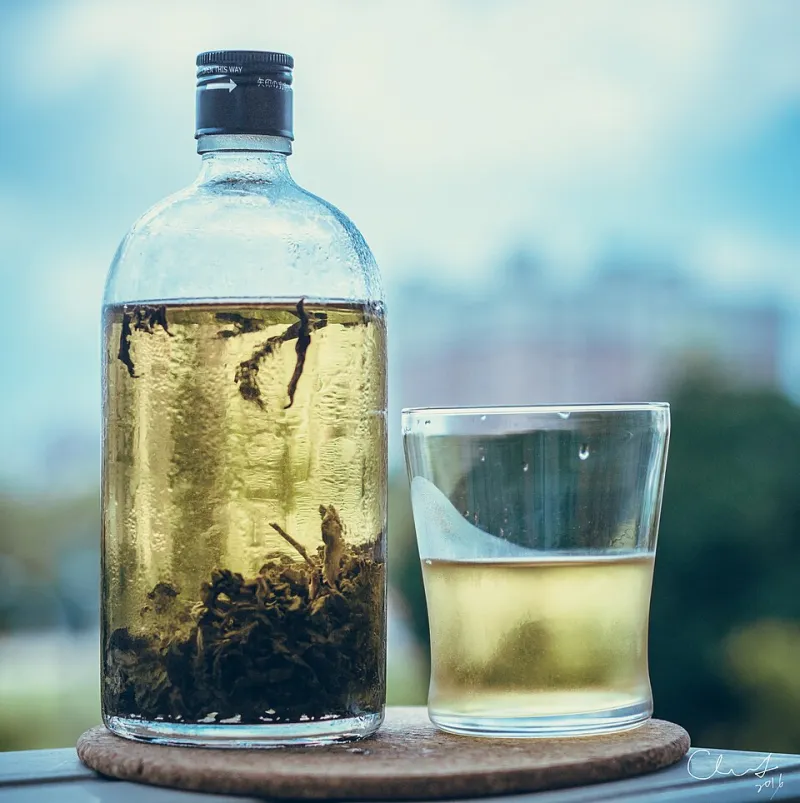
Photo: ありわかだ... from Taichung,Taiwan, Taiwan,R.O.C, CC BY-SA 2.0, via Wikimedia Commons
Mid-November is when lunch can slide into beige. The carrots are sturdy, the cabbage is cheap, the beetroot is muddy and the cucumber is doing its best. You want something bright and crunchy, but you do not want to stand at the hob making a dressing that needs warming, whisking and washing up.
This is where the humble British teabag earns a second job. Not as a novelty, and not as a mug of tea tipped over a salad. Think of it as a cold infusion: water, leaf and time doing quiet work in the fridge. The result is a light, tannic base that can season raw vegetables without cooking them. It is cheap, it is already in the cupboard, and it keeps the kettle out of the equation.
Why a teabag belongs in the marinade, not just the mug
Tea is mostly water, but it also carries aromatics and tannins. Hot water pulls those out fast and can bring bitterness along for the ride. Cold water is slower and gentler, so you get fragrance and structure without the stewed, dusty edge that makes people say they do not like tea.
A teabag marinade is not about making your cabbage taste like a brew. It is about giving raw veg a little savoury depth. The tea gives a faint background note, the acid wakes everything up, and the salt does the real heavy lifting. You are essentially making a very thin, very British brine with a tea bag dangling in it.
It also fits the way we actually eat in winter: in jars, in lunchboxes, in bowls assembled from whatever is in the fridge drawer. Make a jar on Sunday, eat it over two or three days, and stop pretending you are going to make a fresh dressing every lunchtime.
Tannins: the grip that makes raw veg taste finished
Tannins are the reason tea can feel drying on your tongue. In a marinade, that dryness can be useful. It gives raw vegetables a bit of grip and stops a bowl tasting watery. English breakfast has plenty of tannin; Earl Grey has a floral bergamot hit plus tannin; rooibos is softer and sweeter; peppermint has almost none but brings a clean, cold aroma.
The trick is not to let the tea bully the vegetables. A strong English breakfast infusion left too long will taste like a wet teabag and make delicate cucumber feel dusty. Earl Grey can turn soapy if it sits. Peppermint can taste like toothpaste if you overdo it. Short steeps, cold water and a taste before you commit are your friends.
Tannins also flatter fat and salt. If your raw bowl feels sharp or thin, a little olive oil, a pinch of salt or a spoon of yogurt-style cultured cashew cream can round it out. But start with the marinade alone. You want the vegetables to taste seasoned, not drowned.
Pick a bag that won’t leave plastic in your lunch
Most British teabags look like paper, but not all of them are plastic-free. Some paper bags are sealed with a thin strip of polypropylene, which is why they do not always compost cleanly. If that matters to you, look for boxes marked plastic-free, compostable or paper-only. Loose leaf tea in a stainless steel infuser is the safest bet, and it gives you more control over strength.
Avoid silky pyramid bags unless the packet explicitly says they are plastic-free and compostable. Do not cut open a bag and tip the leaves into the jar unless you know the bag is paper and plastic-free, because you will end up fishing out soggy paper fragments. And do not squeeze a hot teabag into a cold marinade; you are making a cold infusion, not a mug of builder’s.
Three starting formulas
These are starting points, not rules. Use 250–300ml cold water per teabag, 1–2 tablespoons of acid per 300ml, and ¼–½ teaspoon of fine salt. Taste the strained tea before you add the vegetables.
1. The Builder’s Brine — English breakfast, for carrots and cabbage
- 300ml cold water
- 1 English breakfast teabag
- 2 tbsp cider vinegar
- ½ tsp fine sea salt
- 1 tsp maple syrup or honey
Steep the bag in the water in the fridge for 25 minutes, then squeeze gently and remove. Stir in the vinegar, salt and sweetness. Pour over 250g of ribboned carrots and shredded white or January King cabbage. Leave in the fridge for 1–2 hours. The carrot keeps its snap; the cabbage softens just enough to eat comfortably.
2. The Short Bergamot — Earl Grey, for beetroot
- 300ml cold water
- 1 Earl Grey teabag
- 1 tbsp lemon juice
- 1 tbsp orange juice
- ¼ tsp fine salt
Steep for 15 minutes only. Strain and stir in the juices and salt. Pour over 250g of thinly sliced raw beetroot — a mandoline is useful here — and leave for 30–45 minutes. Longer than an hour and the bergamot starts to taste like perfume. The beetroot should still be earthy, just brighter at the edges.
3. The Minted Cooler — peppermint and rooibos, for cucumber and cabbage
- 300ml cold water
- 1 peppermint teabag
- 1 rooibos teabag
- 1 tbsp white wine vinegar or rice vinegar
- A pinch of salt
- A pinch of sugar
Steep both bags for 20 minutes, then strain. Stir in the vinegar, salt and sugar. Pour over cucumber batons and thinly sliced cabbage and leave for 20–30 minutes. This is the gentlest of the three: cooling, clean and good with a spoon of something creamy on top.
The taste-testing framework
Do not judge a tea marinade by smell alone. Use a simple four-step check.
First, taste the strained tea cold. Is it fragrant or dusty? Does it make your mouth feel dry? If it is already harsh, dilute it with a splash of water before it goes near a vegetable.
Second, taste the marinade with a pinch of salt. Salt changes the whole picture. A tea that tastes flat on its own can suddenly make sense.
Third, taste the vegetables at 30 minutes, at 2 hours and the next day. Score each batch from 1 to 3 for aroma, tannin, acid, salt and sweetness. A 2 is usually where you want to be: present but not shouty. If the tannin is at 3, add more vegetables or a splash of water. If the acid is at 3, add a pinch of sugar. If it tastes dull, you probably need salt, not more tea.
Fourth, taste it the way you will actually eat it — with a little oil, a spoon of something creamy, or a handful of toasted seeds. Marinades behave differently once fat arrives.
Food-safety basics for cold marinades
Cold water does not sterilise anything, so keep the fridge doing its job. Use a clean jar, clean hands and a clean spoon. Keep the vegetables submerged in the marinade and store the jar in the fridge at 5°C or below. Do not leave it on the counter for a leisurely afternoon.
Eat within three days, and do not reuse the marinade once it has had raw vegetables sitting in it. If you want a dressing for later, keep a separate batch of the strained tea. Wash muddy roots properly before slicing, and if you are cooking for anyone pregnant, elderly or immunocompromised, be extra careful with raw vegetable storage and use cooled boiled water for the infusion if you want to be cautious.
The kettle can stay off. One bag, one jar, one cold hour in the fridge — that is enough to turn a plain winter lunch into something with a bit of snap and a bit of backbone.